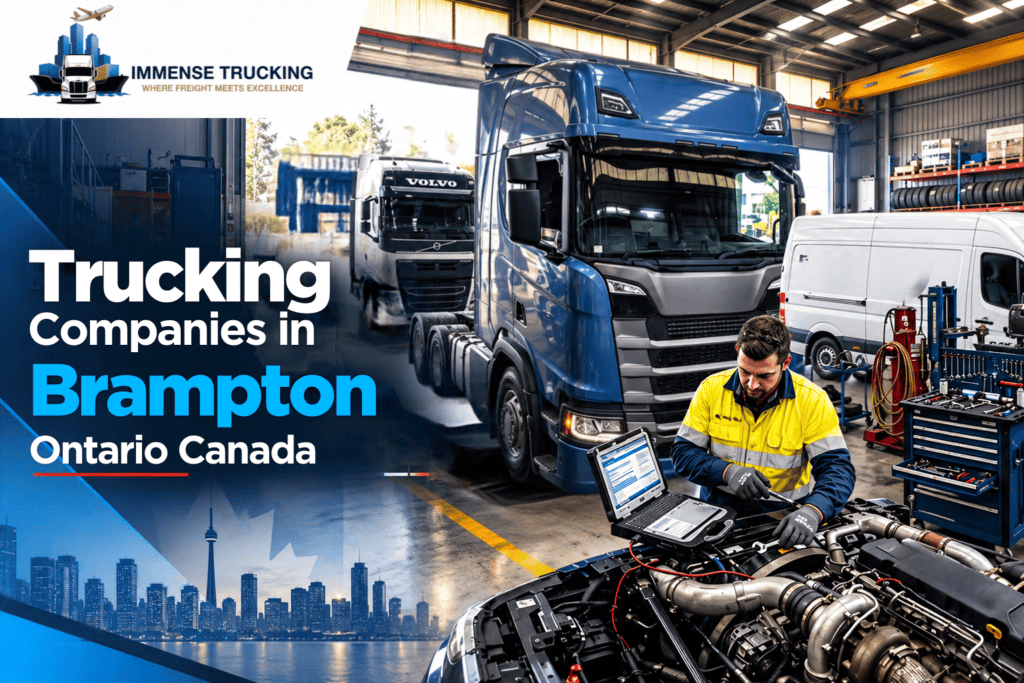
Trucking Companies in Brampton Ontario: Freight Guide
Finding the right trucking companies in brampton ontario can make freight transportation easier for businesses of every size. Whether we move industrial equipment, building materials, retail products, or shipping containers, we need a transport partner that understands our deadlines and cargo requirements. Brampton offers access to major highways, distribution centers, warehouses, and important commercial routes across Ontario. Therefore, choosing suitable transportation services can help us manage deliveries, control costs, and maintain an efficient supply chain. In this guide, we explore essential freight services, equipment handling options, and practical ways to choose transportation support that fits our business needs. 1. Why Brampton Is an Important Location for Freight Transportation Brampton plays an important role in Ontario’s transportation network. Its location near major highways and the Greater Toronto Area makes it useful for regional distribution and long-distance freight movement. We can use this location to connect warehouses, manufacturing facilities, retailers, and distribution hubs. Moreover, access to nearby transportation infrastructure helps businesses coordinate incoming materials and outgoing orders. A well-planned freight network can reduce unnecessary handling and support timely deliveries. When we assess a transport provider, we should consider its service area, equipment availability, scheduling process, and experience with our type of cargo. Highway access: Supports freight movement across Ontario and neighbouring markets. Warehouse connections: Helps coordinate inventory transfers and distribution. Regional deliveries: Makes it easier to serve commercial customers across the Greater Toronto Area. Flexible scheduling: Supports changing shipment volumes and delivery requirements. 2. Choosing a Freight Partner That Understands Our Business Working with a logistics solutions company in Canada can help us coordinate transportation, storage, and shipment planning through a more organised process. However, we should look beyond basic delivery rates. Our ideal partner should understand our cargo, delivery windows, documentation needs, and operational challenges. Clear communication is equally important because unexpected delays can affect production schedules and customer commitments. We should also ask about shipment tracking, insurance requirements, and procedures for handling damaged or delayed freight. By comparing these details, we can make an informed decision and build a transportation arrangement that supports our long-term business goals. Service coverage: Confirm whether the provider serves our regular pickup and delivery locations. Cargo experience: Check its ability to handle our specific freight requirements. Communication: Look for clear updates and accessible customer support. Cost transparency: Review fuel charges, waiting fees, and other possible expenses. 3. Matching Transportation Services to Different Cargo Needs Every shipment requires a suitable transportation plan. Our freight may include palletised products, construction supplies, machinery, or oversized commercial equipment. A professional trucking solutions company canada businesses can work with should help us identify suitable vehicles, loading arrangements, and delivery schedules. For example, dry van trailers may suit general freight, while flatbed equipment can accommodate certain oversized loads. Specialized cargo may require additional permits, securement methods, or careful route planning. We should explain our shipment dimensions, weight, loading conditions, and delivery deadlines before requesting a quote. This information helps us avoid unsuitable equipment and unnecessary transportation expenses. Dry van freight: Suitable for many boxed and palletised goods. Flatbed transportation: Useful for compatible construction materials and machinery. Specialised hauling: May require additional equipment and regulatory planning. Scheduled deliveries: Help coordinate receiving teams and unloading operations. 4. Moving Heavy Equipment Without Unnecessary Delays Industrial operations often depend on moving heavy equipment between warehouses, factories, construction sites, and distribution facilities. When arranging a forklift service in Canada, we should identify whether we need equipment handling, loading assistance, unloading support, or a complete transportation arrangement. Forklifts can help move palletised goods and heavy items when the equipment has the appropriate capacity and attachments. However, safe handling depends on load weight, ground conditions, operator training, and available space. We should plan access points and confirm the receiving location before dispatch. Good preparation helps reduce handling risks and keeps our freight movement organised. Load assessment: Confirm the weight, dimensions, and stability of each item. Site preparation: Keep loading zones clear and accessible. Qualified operators: Use trained personnel for equipment handling. Safety checks: Verify that the selected equipment suits the task. 5. Planning Equipment Deliveries Across Canadian Routes Transporting forklifts requires more than arranging a vehicle. We must consider machine dimensions, operating weight, loading access, and the distance between pickup and delivery locations. Professional forklift transport in Canada can support businesses relocating equipment between facilities or receiving newly purchased machines. Depending on the equipment, a suitable trailer, secure loading system, and specialised hauling arrangement may be necessary. We should also confirm whether the forklift can be driven onto the trailer safely or requires alternative loading equipment. By sharing accurate specifications before booking, we can improve scheduling and reduce the risk of unexpected charges. Equipment measurements: Provide the machine’s dimensions and weight. Trailer selection: Match the vehicle to the forklift’s specifications. Secure loading: Confirm appropriate restraints and loading procedures. Delivery access: Check site entrances, ground conditions, and unloading space. 6. Renting Equipment for Temporary Freight Operations Buying equipment may not make financial sense when our operational needs change throughout the year. For short-term projects, seasonal demand, or temporary warehouse expansion, forklift rental in Canada may provide a practical alternative. Renting can help us access suitable machinery without committing to a long-term purchase. Before selecting a rental arrangement, we should consider the duration, lifting capacity, operating environment, and maintenance responsibilities. We must also check operator requirements and the rental agreement’s terms. A clear assessment of these factors helps us choose equipment that meets our needs while keeping project expenses manageable. Project duration: Select a rental period that matches the work schedule. Lifting capacity: Ensure the machine can safely handle the intended loads. Maintenance terms: Clarify responsibility for servicing and breakdowns. Operating costs: Compare rental fees, delivery charges, and other expenses. 7. Coordinating Port-Related Freight and Container Movement Businesses receiving imported goods often need transportation between ports, rail terminals, container yards, and warehouses. In these situations, drayage trucking services help move containers over relatively short distances as part of a wider freight journey. We should coordinate pickup appointments, container availability,