
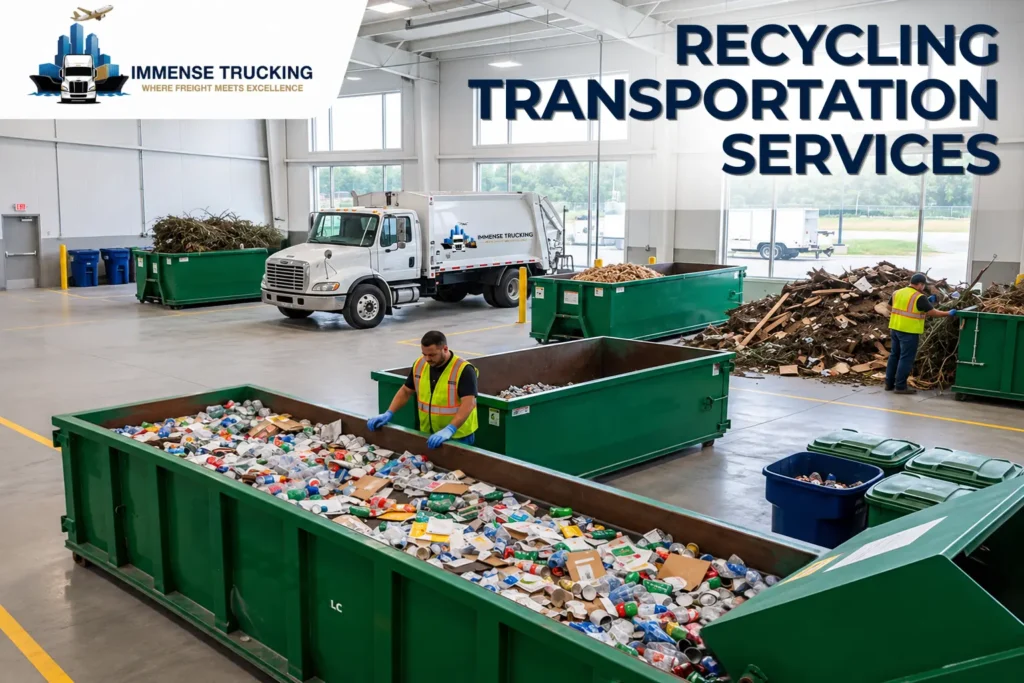
Recycling Transportation Services for Smarter Waste Logistics
Recycling Transportation Services: A Practical Guide to Smarter Waste Logistics Recycling transportation services help businesses move recyclable materials safely and efficiently from collection points, facilities, construction sites, warehouses, and manufacturing operations to appropriate processing or recovery facilities. Effective recycling logistics depends on more than finding a truck. Businesses must consider material type, volume, equipment, routing, receiving-facility requirements, and applicable transportation regulations. For companies handling recurring waste streams, a well-organized transportation plan can reduce unnecessary trips, improve scheduling, and make recycling operations easier to manage. What Are Recycling Transportation Services? Recycling transportation services cover the collection and movement of recyclable materials between locations. Depending on the material, this can involve local trucking, specialized trailers, containers, roll-off equipment, or multimodal transportation. Common materials include: Cardboard and paper Plastics Glass Scrap metal Wood Construction and demolition materials Electronic equipment Tires Certain industrial materials The appropriate transportation method depends on the characteristics of the material and the requirements of the receiving facility. For example, a construction site generating scrap metal and wood may require a different transportation arrangement from a manufacturing plant producing large quantities of cardboard and plastic packaging. How Do Recycling Trucking Companies Support Waste Logistics? Recycling trucking companies provide the physical transportation link between businesses and recycling or processing facilities. Their role can include scheduled pickups, dedicated routes, short-haul transportation, and coordination of equipment and delivery appointments. A business should provide accurate information about the material, estimated quantity, pickup frequency, loading conditions, and destination before arranging transportation. This information allows the carrier to determine whether a particular truck or trailer is appropriate and whether special handling considerations apply. Building a More Efficient Recycling Supply Chain A recycling supply chain logistics company may coordinate several parts of the material movement process rather than focusing only on the truck. A typical recycling supply chain can include: Material segregation at the source. Temporary storage or collection. Transportation to a processing facility. Sorting or processing. Movement of recovered materials to manufacturers or other end users. Good coordination between these stages matters. If recyclable material accumulates faster than it can be collected, storage areas can become congested. On the other hand, sending trucks before enough material is available can create unnecessary transportation costs. Practical Steps for Better Recycling Transportation 1. Identify the Material Start by determining exactly what is being transported. Different materials have different handling and transportation requirements. Do not assume that all waste can be treated as ordinary recyclable freight. Batteries, chemicals, contaminated materials, and certain industrial products may fall under additional regulatory requirements. 2. Estimate Weight and Volume Accurate estimates help determine vehicle requirements and pickup frequency. Businesses should consider both weight and physical volume because a shipment can reach a vehicle’s space limit before reaching its maximum weight capacity. 3. Confirm the Receiving Facility Before dispatching a truck, confirm that the destination accepts the material and understands the shipment requirements. This is particularly important when working with specialized recycling or processing facilities. 4. Plan Pickup Frequency Recurring waste streams may benefit from scheduled transportation. The right frequency depends on generation rates, available storage space, production schedules, and facility operating hours. 5. Consider Loading Requirements A location may require forklifts, loading docks, containers, ramps, or other equipment. In Canada, for example, a business arranging forklift rental in Canada for a recycling or industrial operation may need to coordinate the rental period with the carrier’s arrival and the facility’s loading schedule. Industry-Specific Recycling Logistics Different industries generate different materials and face different transportation challenges. Construction and Demolition Construction sites can generate concrete, scrap metal, wood, cardboard, drywall, and other recoverable materials. A construction transport company working with these sites needs to account for changing project schedules, site access, loading areas, and the availability of heavy equipment. Transportation planning is particularly important when materials need to leave the site regularly to prevent storage areas from becoming overloaded. Heavy Equipment and Industrial Operations Industrial businesses may need to move machinery, components, scrap metal, equipment, or other oversized materials. Heavy equipment logistics solutions can involve route planning, appropriate trailers, loading equipment, permits, and coordination between multiple parties. The same principles can apply when recyclable materials are generated during equipment replacement, facility upgrades, or industrial projects. Food and Beverage Operations Food and beverage facilities commonly generate cardboard, glass, plastics, packaging, pallets, and other materials. Food beverage logistics services may involve recurring transportation schedules because these businesses can generate consistent volumes of packaging and other recyclable material. Separating materials at the source can also make transportation and downstream processing more straightforward. Pharmaceutical Operations Pharmaceutical facilities require careful handling of products, packaging, and materials that may be subject to specific rules. Businesses researching pharma logistics services Canada should distinguish ordinary recyclable packaging from pharmaceutical products, contaminated materials, or other regulated waste. Canadian transportation and waste requirements can differ from those in the United States, so businesses should verify the rules that apply to their specific shipment and jurisdiction. Can Recycling Transportation Use Intermodal Freight? Yes. Longer supply chains may combine trucking with rail or ocean transportation. Intermodal drayage in Canada, for instance, refers to the short-distance movement of containers between ports, rail terminals, warehouses, distribution centers, and other nearby facilities. Drayage can become one part of a larger transportation network. A shipment might travel by truck from a collection facility to a rail terminal, move by rail over a longer distance, and then return to a truck for final delivery. Similarly, sea freight shipping companies can play a role when recovered materials or recyclable commodities move internationally. Ocean transportation is generally considered as part of the broader supply chain rather than a replacement for local collection and trucking. Choosing a Transportation Provider Businesses often compare multiple transportation providers before selecting a carrier. Searching for the best logistics company in Canada, for example, may produce many options, but a useful comparison should focus on the requirements of the particular shipment rather than a generic ranking. Consider factors such as: Relevant transportation experience Available equipment Geographic coverage Scheduling capabilities Communication procedures