
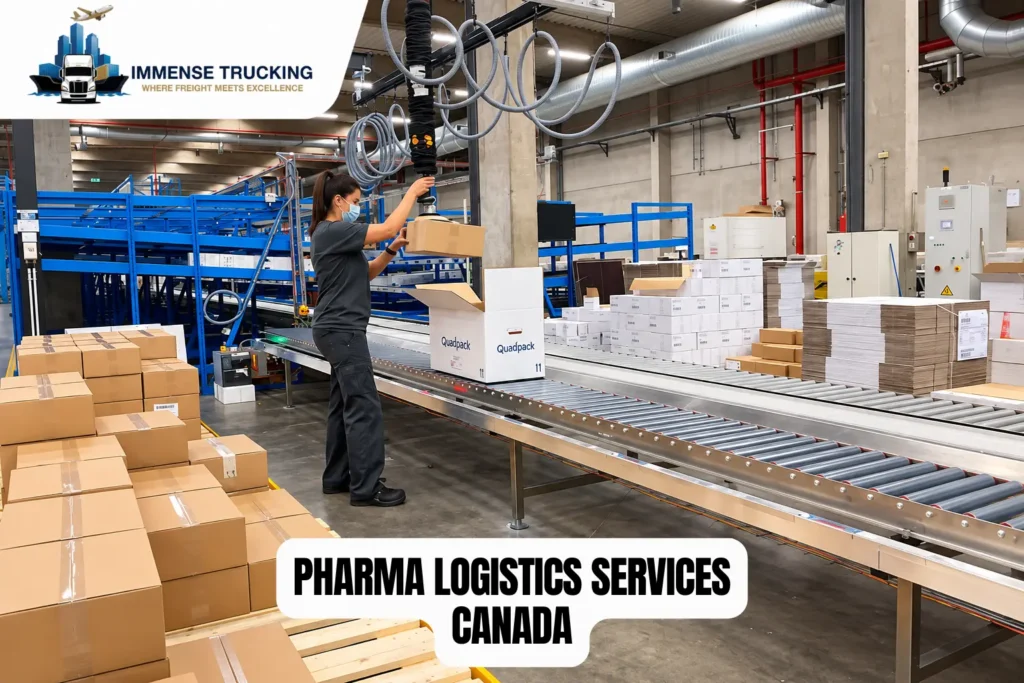
Pharma Logistics Services Canada: Complete Guide & Solutions
Introduction Pharmaceutical transportation requires more than moving products from one location to another. Temperature, packaging, handling, documentation, route planning, security, and regulatory requirements can all affect the condition of a shipment. In Canada, pharma logistics services cover transportation, warehousing, shipment planning, monitoring, and coordination for pharmaceutical products. Health Canada states that drugs must be transported under conditions that protect their safety, quality, and efficacy, including applicable temperature and environmental requirements. This guide explains how pharmaceutical logistics works in Canada, what businesses should consider when selecting transportation solutions, and how related logistics services can support complex supply chains. What Are Pharma Logistics Services in Canada? Pharma logistics services Canada refers to the planning and management of pharmaceutical products as they move through the supply chain. Depending on the shipment, services may include: Pharmaceutical trucking Temperature-controlled transportation Warehousing and storage Shipment tracking Packaging coordination Route planning Cross-border transportation Inventory management Reverse logistics Documentation and compliance support A pharma supply chain logistics company may coordinate several of these activities instead of treating transportation as an isolated service. For example, a pharmaceutical shipment could move from a manufacturer to a warehouse, then to a distributor, hospital, pharmacy, or healthcare facility. Each stage needs appropriate handling and documented procedures. Why Temperature Control Matters in Pharmaceutical Transportation Temperature control is one of the most important considerations in pharmaceutical logistics. Health Canada explains that drugs should be transported according to their labelled storage and transportation conditions. Businesses should also reduce the risk of temperature excursions, which occur when products are exposed to temperatures outside their acceptable range. Temperature-sensitive products may require: Refrigerated vehicles Insulated shipping containers Qualified thermal packaging Temperature monitoring devices Temperature mapping Calibrated data loggers Defined loading procedures Contingency plans for delays The required solution depends on the product. A shipment that remains stable at ambient temperature may have different requirements from a product requiring refrigerated or frozen conditions. Health Canada also recommends considering route length, seasonal conditions, transportation modes, packaging, and possible delays when developing transportation procedures. What Should a Pharmaceutical Logistics Plan Include? A practical transportation plan should begin before the freight is loaded. 1. Understand the Product First, identify the product’s storage and transportation requirements. Review: Labelled temperature range Humidity requirements Light sensitivity Physical handling requirements Packaging requirements Shelf-life considerations Special handling instructions This information determines the type of equipment and packaging needed. 2. Select the Transportation Mode Road transportation is often important for domestic distribution in Canada. However, pharmaceutical supply chains can also involve rail, marine, or air transportation. The correct mode depends on: Distance Delivery deadline Product sensitivity Shipment size Origin and destination Available infrastructure Required temperature controls For international shipments, ocean freight shipping companies may be involved when transit time and product characteristics allow marine transportation. 3. Plan the Route Route planning should consider more than mileage. A logistics provider may evaluate border crossings, weather, road conditions, traffic, transfer points, facility hours, and possible delays. For temperature-sensitive freight, route planning also helps determine whether packaging or active temperature-controlled equipment can maintain the required conditions throughout transit. 4. Prepare for Delays A strong logistics plan includes contingency procedures. Health Canada specifically recommends written procedures and contingency plans for unforeseen transportation delays, including equipment problems and security inspections. For example, a plan might identify: Backup equipment Alternate routes Emergency contacts Temperature excursion procedures Alternate storage locations Escalation procedures How Other Logistics Services Support Pharma Supply Chains Pharmaceutical supply chains rarely operate independently. They often share transportation infrastructure with other industries. A provider offering broader logistics services in Canada may coordinate different freight requirements while maintaining shipment-specific procedures. Container Drayage Services Container drayage services move containers over relatively short distances between ports, rail terminals, warehouses, and other facilities. For pharmaceutical imports, drayage can become part of a larger multimodal supply chain. However, the shipment’s temperature and handling requirements still need to be considered when containers change locations or transportation modes. Forklift Rental in Canada Warehouses and distribution facilities may need material-handling equipment for loading and unloading. Forklift rental in Canada can support temporary warehouse requirements, facility expansions, peak seasons, or project-based operations. Proper equipment selection and trained operation remain important when handling packaged pharmaceutical freight. Heavy Equipment Logistics Solutions Pharmaceutical companies may also need equipment moved during facility construction, expansion, or maintenance projects. Heavy equipment logistics solutions can cover the transportation planning needed for oversized machinery, specialized equipment, or industrial components. These shipments require different equipment and planning from pharmaceutical freight, but both may depend on coordinated scheduling and warehouse access. Food Beverage Logistics Services Food, beverage, and pharmaceutical supply chains can share certain logistics principles, particularly around controlled environments, inventory coordination, and time-sensitive deliveries. However, businesses should not assume that the requirements are identical. Pharmaceutical shipments can have specific regulatory and product-quality requirements that need dedicated procedures. Where Recycling Transportation Services Fit Into Reverse Logistics Recycling transportation services can become relevant when pharmaceutical businesses manage packaging materials, damaged shipping materials, pallets, containers, or other recoverable materials. Reverse logistics moves materials away from the normal forward supply chain. Instead of delivering finished goods to customers, it coordinates returns, recovery, recycling, or disposal. Businesses may work with recycling trucking companies to move appropriate recyclable materials to processing facilities. The important point is segregation. Pharmaceutical products, contaminated materials, regulated waste, and ordinary recyclable packaging should not automatically be treated as the same freight stream. If pharmaceutical waste or dangerous goods are involved, applicable requirements must be reviewed before transportation. What Regulations Apply to Pharmaceutical Transportation in Canada? Several regulatory considerations may apply depending on the product and transportation method. Health Canada’s pharmaceutical transportation guidance addresses environmental controls, written procedures, transportation containers, monitoring, documentation, and carrier oversight. The Transportation of Dangerous Goods (TDG) Regulations apply to dangerous goods transported in Canada. Transport Canada states that the regulations cover safety requirements for dangerous goods transported by road, rail, marine, and air. Not every pharmaceutical shipment is automatically classified as dangerous goods. Classification depends on the specific product and applicable requirements. Therefore, businesses should determine whether