
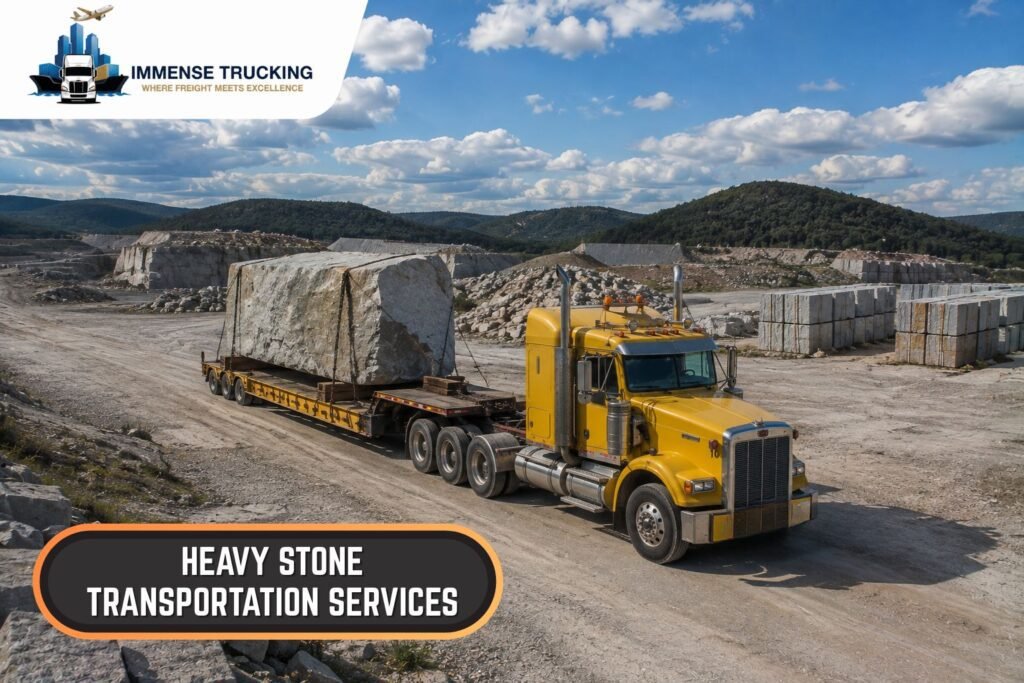
Heavy Stone Transportation Services for Safe Hauling
Introduction Heavy stone transportation services play a vital role when construction companies, stone suppliers, fabricators, and infrastructure contractors need to move dense materials safely. Heavy stone can include granite blocks, marble slabs, limestone, pavers, aggregates, and other oversized products. Because these loads are extremely heavy, ordinary hauling methods can create safety, scheduling, and handling challenges. Therefore, businesses need suitable equipment, secure loading, careful route planning, and experienced drivers. Reliable heavy stone transportation services help reduce delays while protecting valuable materials during every stage of the journey. From local deliveries to longer routes across Canada, hauling supports smoother projects and supply chains. Why Heavy Stone Transportation Services Matter Stone products are strong, but they can still crack, chip, shift, or become damaged when a load receives poor support. Moreover, uneven weight distribution can affect vehicle stability and increase transportation risks. For that reason, professional carriers begin with a detailed shipment review. First, the carrier considers the weight, dimensions, shape, and center of gravity of each item. Next, the team selects a suitable trailer, loading method, and securement system. In addition, route planning helps identify road restrictions, bridge limits, construction zones, and difficult access points. As a result, customers receive a transportation plan that matches the actual shipment. Professional heavy stone transportation services in CA also help businesses manage timing. Construction projects often depend on stone arriving on a specific day. Therefore, a missed delivery can slow installation, create labor downtime, and affect other trades. Reliable scheduling keeps materials moving and helps project managers maintain better control. Types of Stone Loads That Need Specialized Hauling Different stone products require different handling methods. For example, large granite blocks can create concentrated weight, while long slabs need careful support to prevent movement. Similarly, architectural stone, precast pieces, retaining wall blocks, and landscaping materials may need specialized loading arrangements. Granite and Marble Granite and marble are common in countertops, commercial buildings, monuments, floors, and exterior features. However, their weight and surface characteristics require careful handling. Proper padding, support, and securement help reduce movement during transit. Limestone and Aggregate Limestone, crushed stone, and aggregates support construction and infrastructure work. Because these materials can shift in bulk, carriers must choose equipment and loading practices that suit the material and route. Oversized Stone Products Some projects involve unusually long, wide, or heavy stone pieces. Therefore, transportation may require specialized trailers, route checks, and additional planning. In these cases, Heavy Stone Transportation Services provides a practical way to coordinate movement from pickup to delivery. Safe Loading and Securement Practices Loading is one of the most important parts of heavy stone hauling. Before the vehicle leaves, the crew should inspect the trailer, confirm weight distribution, and check all securement points. Furthermore, workers should use suitable straps, chains, blocking, bracing, and protective materials according to the shipment. Stone should sit on stable supports that limit shifting and reduce pressure points. Additionally, the load should remain balanced across the trailer. If a heavy item sits incorrectly, the vehicle can become difficult to control. Therefore, experienced loading teams take time to position every piece correctly. During transit, drivers should monitor road conditions and adjust their driving style. Smooth acceleration, controlled braking, and careful cornering help protect cargo and equipment. Consequently, proper handling reduces the chance of damage and supports safer deliveries. Route Planning for Heavy Stone Hauling Route planning goes beyond choosing the shortest distance. Instead, transportation teams review road conditions, clearance requirements, weight restrictions, bridge capacities, traffic, construction activity, and delivery-site access. For example, a route that works for a standard trailer may not work for a heavily loaded stone shipment. Therefore, planners should evaluate the complete route before dispatch. In addition, the delivery location should be reviewed so drivers know where to position the vehicle and unload safely. A reliable road transportation company can coordinate these details while keeping the shipment aligned with the delivery schedule. Moreover, clear communication between dispatchers, drivers, suppliers, and customers helps prevent surprises. Equipment Used for Heavy Stone Transportation Services Specialized equipment can make a major difference in heavy hauling. Depending on the shipment, carriers may use flatbed trailers, step-deck trailers, lowboy equipment, heavy-duty straps, chains, blocking systems, and lifting equipment. Furthermore, forklifts or cranes may support loading and unloading when workers cannot handle the stone manually. Businesses that need forklift transport in Canada may coordinate equipment movement with the main freight plan. This approach can reduce unnecessary transfers and improve site efficiency. Equipment selection should match the cargo. For instance, oversized pieces may need additional deck space, while extremely dense loads may require equipment designed for higher weight capacities. Therefore, professional carriers assess the shipment before assigning transportation resources. How Heavy Stone Transportation Supports Canadian Industries Heavy stone hauling supports many industries across Canada. Construction contractors use stone for foundations, commercial developments, roads, landscaping, and architectural projects. Likewise, manufacturers and fabricators depend on dependable transportation to move raw materials and finished products. A strong transportation network can connect stone suppliers with regional markets. As a result, businesses can maintain inventory flow and respond to customer demand more efficiently. A trucking solutions company Canada businesses trust can coordinate heavy loads alongside other freight requirements. In addition, a canada shipping company may connect domestic transportation with broader supply chain movements. This flexibility helps when a shipment starts locally but later moves through another distribution channel. Integrated Logistics for Stone and Related Freight Heavy stone shipments rarely exist alone. A supplier may also need to move tools, packaging, machinery, construction supplies, or other materials. Therefore, an experienced freight logistics solutions company can coordinate multiple transportation needs under one plan. For example, a construction project may require stone deliveries alongside equipment and building materials. Similarly, a landscaping supplier may need stone, pavers, soil, and machinery delivered to different locations. By coordinating these movements, businesses can improve scheduling and reduce unnecessary transportation steps. The same principle applies to companies that manage food, agriculture, or industrial freight. A food transportation logistics company, for instance, needs specialized handling for temperature-sensitive goods,